AZ Tiki: A Tropical Typeface with Island Character
Some fonts whisper. AZ Tiki practically invites you to a luau. This isn't a typeface you bury in body copy or hide inside a footer. It's a display font with a distinct personality—hand-drawn, playful, and unabashedly tropical. If you've ever scrolled through a font library looking for something that immediately communicates warmth, relaxation, or a sense of escape, this is the kind of design asset that stops the scroll. It doesn't try to be neutral. It arrives with a vibe.
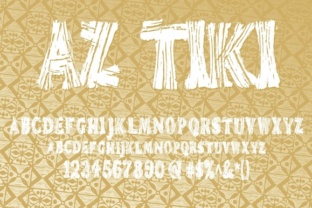
AZ Tiki draws heavily from mid-century Polynesian-inspired aesthetics, the kind you'd see on vintage postcards, bamboo signage, and resort logos from the 1950s and 60s. The letterforms are rounded, organic, and slightly irregular, mimicking carved wood or hand-painted signs. There's a deliberate roughness to the edges that gives it texture and authenticity. It's not polished in a sterile, digital way. It feels like it was made by hand, which is exactly the point. For designers and brand strategists looking to inject warmth and nostalgia into a project, this font offers something that a clean sans serif simply cannot: emotional immediacy.
A Typeface That Sets the Mood Before Anyone Reads a Word
Typography does more than convey information. It sets an emotional tone. A sharp, geometric sans serif feels modern, efficient, maybe a little cold. A classic serif feels authoritative and trustworthy. A script font can feel elegant or romantic. AZ Tiki lands somewhere entirely different. It's casual, friendly, and unpretentious. The letter spacing tends to be generous, the curves soft, and the overall silhouette reminiscent of retro tourism and surf culture. This makes it an ideal choice for projects where you want the audience to feel at ease before they even process what the text says.
That personality is what makes it valuable for small business owners, especially those in hospitality, food and beverage, or creative services. A taco truck, a boutique hotel, a beachside bar, a craft brewery with a tropical IPA—these are the kinds of brands that benefit from a display font with real character. The typeface does part of the storytelling work. You don't need a long tagline explaining that your brand is relaxed and fun. The font says it instantly.
Where AZ Tiki Shines Across Projects and Platforms
Because AZ Tiki is a display font, not a workhorse text face, it works best at larger sizes. Think headlines, logos, packaging, signage, posters, and social media graphics. It's particularly effective in editorial design for travel magazines or lifestyle publications that cover tropical destinations. A pull quote set in AZ Tiki against a lush palm-tree photograph feels natural, not forced. The same goes for packaging design—a coconut rum bottle, a jar of island-inspired hot sauce, or a box of artisan chocolates with tropical flavors all benefit from the font's visual cues.
In web design, AZ Tiki works well as a hero headline or a logo mark, but you'll want to pair it with a clean sans serif for body copy to maintain readability. The contrast between a playful display font and a neutral supporting typeface creates a clear visual hierarchy. The viewer's eye lands on the headline first, absorbs the personality, then moves to the body text for details. That separation is critical for effective communication. Without it, everything competes for attention and nothing wins.
For social media graphics, especially on Instagram or Pinterest, AZ Tiki can be a secret weapon. A quote graphic or a promotional post with that tropical lettering stands out in a sea of generic typography. It gives the content a distinct identity. Marketers and content creators who need to establish a recognizable visual voice will find that a consistent use of this typeface across posts builds familiarity and recognition faster than switching fonts every week.
How AZ Tiki Influences Brand Perception and Engagement
Every font choice communicates something about a brand's values. A brand using AZ Tiki is telling its audience, "We don't take ourselves too seriously," or, "We value warmth over formality." That can be a powerful positioning, especially in markets where consumers are tired of sterile, corporate aesthetics. The handwritten quality of the font adds a layer of approachability. It feels personal, almost like someone wrote the sign by hand for a small shop. In an era where consumers increasingly seek authenticity, that handmade quality is a genuine asset.
Brand identity is built on consistency and recognition. When you commit to a typeface like AZ Tiki across your materials—menus, business cards, website headers, email newsletters—you create a cohesive visual language. Customers start to associate that look with your business. Over time, that recognition builds trust. They don't just see a font; they see your font. That kind of brand equity is hard to quantify but easy to feel. Small business owners and entrepreneurs often underestimate how much a consistent typography system contributes to perceived professionalism. A thoughtful font pairing, where AZ Tiki handles the headlines and a complementary serif or sans serif handles the details, signals that you've put care into your presentation.
Engagement also benefits. Content that looks distinctive gets clicked, shared, and remembered. A blog post with a generic headline font might get a glance, but a headline set in AZ Tiki with a tropical background image prompts a second look. That extra moment of attention is valuable, whether you're selling a product, promoting an event, or building an audience. Publishers and bloggers in the travel, lifestyle, and food spaces have a natural advantage here. A font that visually reinforces your niche makes your content instantly recognizable to your target audience.
Practical Guidance for Choosing and Using AZ Tiki
Before you buy and download AZ Tiki, take a step back and evaluate your project's needs. This is a commercial font, and like most quality design assets, it requires a license for business use. Check the licensing terms carefully. Some foundries offer a standard license that covers most personal and commercial projects, while others restrict usage in certain contexts like app design or merchandise resale. If you're a designer purchasing for a client, make sure the license covers the client's intended use case. It's a small step that saves headaches later.
When evaluating fit, ask yourself: does the project actually benefit from a tropical, hand-drawn aesthetic? If the answer is yes, AZ Tiki is a strong candidate. If the project calls for something more restrained or professional, like a law firm website or a corporate report, this is probably the wrong choice. That's not a knock on the font. It's about font pairing and context. A display font is only as good as the project it serves. Trying to force it into a role it wasn't designed for will hurt readability and brand perception.
Readability considerations matter too. At very large sizes, AZ Tiki is easy to read because the letterforms are distinct. At smaller sizes, especially below 18 or 24 points, the rough edges and organic shapes can make certain characters harder to distinguish. For body text, digital interfaces, or small print, pair it with a clean sans serif font like Montserrat, Open Sans, or Lato. For a more classic contrast, a serif font like Playfair Display or Georgia works well. The key is contrast. Let AZ Tiki be the star, and give it a supporting player that doesn't compete for attention.
Testing is essential. Don't just look at the font in isolation. Set a few headlines in your design software, add a background image, write a subheading in your chosen pairing font, and see how they work together. Adjust letter spacing, line height, and color. Sometimes a font that looks perfect in a specimen sheet feels off in a real layout. That's normal. Give yourself time to experiment. And if you're using a script font or a handwritten font like AZ Tiki for a logo, test it at different sizes—business card size versus billboard size—to make sure it scales well.
Real-World Applications and Design Observations
I've seen AZ Tiki used in several projects that stuck with me. One was a small rum distillery in Florida that used it across all their labels and merchandise. The font gave the brand a unified, vintage feel that set it apart from competitors who relied on generic serifs or modern sans serifs. Another was a wedding invitation suite for a beach ceremony. The couple used AZ Tiki for the main headline and a delicate script for the details. The contrast worked beautifully, and the invitations felt personal rather than mass-produced.
For logo design, AZ Tiki works especially well when combined with a simple icon or symbol—a pineapple, a palm leaf, a wave. The font's organic curves echo natural shapes, so the pairing feels harmonious. Avoid overcomplicating it. A complicated logo with too many elements competes with the typeface. Keep the icon simple and let the font do the heavy lifting.
In editorial design, I've seen it used effectively as a drop cap for the opening letter of a feature article about travel or food. It adds a touch of whimsy without overwhelming the page layout. And in packaging design, it's often the differentiator on a shelf. A product that uses generic typography blends in. A product with AZ Tiki stands out, especially in categories like snacks, beverages, and personal care where visual personality drives purchase decisions.
One observation I'll offer as a creative professional: don't overuse it. The power of a display font like AZ Tiki comes from its scarcity. If every single headline, subheading, and accent text uses the same typeface, the impact diminishes. Use it selectively. Reserve it for the most important elements—the primary headline, the logo, the call to action. Let the rest of the design breathe. That restraint is what separates amateur-looking work from professional work.
For bloggers and content creators, consider using AZ Tiki for your blog title or category headers. It creates a visual signature that readers recognize. Pair it with a clean sans serif for article body text to maintain readability on mobile devices. And always, always test on a real screen before publishing. What looks great on a large desktop monitor can become muddy or hard to read on a phone. Modern typography demands that we design for multiple contexts, and that includes thinking about how a display font renders at different resolutions.
Ultimately, AZ Tiki is a tool, and like any tool, its value depends on how you use it. It's a premium font with a distinctive voice, and when placed in the right project—with the right pairing, the right sizing, and the right intention—it elevates the work. It makes people feel something. And in a world where so much design is safe and predictable, that emotional connection is worth pursuing.