Neoscopic Brush: A Modern Tool for Digital Creators
If you work in digital design, content creation, or visual communication, you know that the tools you choose shape not just your output but your entire workflow. The Neoscopic Brush has emerged as a noteworthy option for those who want precision without sacrificing expressiveness. It is not just another digital brush preset. It represents a thoughtful approach to how we interact with digital surfaces, whether that is a tablet screen, a stylus-driven canvas, or a touch-enabled workspace.
What Makes Neoscopic Brush Different
At its core, the Neoscopic Brush is a digital brush engine designed to simulate natural media with a level of fidelity that goes beyond simple texture mapping. It uses procedural algorithms to adjust stroke behavior in real time based on pressure, angle, speed, and even the tilt of your stylus. This means that every mark you make carries a sense of authenticity that is often missing from purely raster-based brushes.
One of its defining qualities is the way it handles edge softness and variable opacity. Instead of applying a uniform layer of color, the brush builds up density gradually, much like a real watercolor or charcoal stick. This makes it especially useful for artists and designers who want to achieve nuanced shading, soft gradients, or layered textures without constantly switching between multiple tools.
The brush also responds to surface friction in a dynamic way. When you move slowly, the stroke becomes heavier and more saturated. When you move quickly, it lightens and becomes more translucent. This kind of responsiveness encourages a more natural drawing rhythm and reduces the need for manual opacity adjustments.
Strengths That Stand Out in Professional Workflows
For professionals who spend hours refining a single illustration, interface mockup, or visual asset, consistency and predictability matter. The Neoscopic Brush delivers on both fronts. Its stroke engine produces repeatable results across sessions, which is critical when you are working on a multi-page project or collaborating with a team. You do not have to worry about the brush behaving differently after a software update or a settings reset.
Another strength is its performance across different pressure curves. Many digital brushes feel either too stiff or too loose, forcing you to adjust your stylus settings or your drawing style. The Neoscopic Brush offers a balanced response that works well with a wide range of input devices, from entry-level styluses to high-end professional tablets. This reduces the learning curve and allows you to focus on the creative work rather than fighting the tool.
It also handles large canvas sizes with minimal lag. This might not seem like a headline feature, but anyone who has worked on a detailed illustration at high resolution knows how frustrating a sluggish brush can be. The Neoscopic Brush maintains fluid performance even when you are working on canvases exceeding 10,000 pixels, making it suitable for billboard designs, large format prints, or detailed digital paintings.
Creative and Artistic Work
Illustrators and concept artists will appreciate the brush's ability to mimic traditional media like graphite, pastel, and ink wash. You can use it for quick gesture sketches where the stroke weight changes naturally with hand speed, or for detailed rendering where you build up layers of tone. The brush also works well for texture creation. If you need a subtle grit overlay for a background or a rough edge for a vintage poster, the Neoscopic Brush can generate that effect organically without relying on external texture packs.
Digital Design and Branding
In branding and UI design, the brush shines when you need to add human touches to digital interfaces. Custom icons, hand-drawn logos, and organic decorative elements often require a tool that feels natural but remains editable. The Neoscopic Brush allows you to draw vector-compatible strokes that retain their organic qualities, so you can scale them without losing the handcrafted look. This is especially useful for brands that want to convey authenticity or a handmade aesthetic without sacrificing the precision of digital output.
Education and Instructional Content
Educators and content creators can use the brush to produce clear, visually engaging diagrams, annotations, and visual notes. Its variable opacity and edge softness make it easy to create layered explanations where you highlight certain areas while dimming others. For example, if you are creating a tutorial on anatomy or product assembly, you can use the brush to gradually reveal parts of the image as you explain each step. This kind of visual pacing keeps learners engaged and helps them follow complex information more easily.
Business and Marketing Materials
Marketers and business owners often need visuals that stand out without looking like stock templates. The Neoscopic Brush can be used to create custom social media graphics, presentation backgrounds, or email headers that feel distinctive. Because the brush produces organic, non-repeating textures, every piece you create has a unique quality. This can be particularly valuable for brands that want to differentiate themselves in crowded markets where generic visuals blend in.
Personal Projects and Hobbyist Work
For freelancers and hobbyists, the brush offers a low-pressure way to explore creative ideas. Its forgiving stroke behavior means you can experiment without worrying about making irreversible marks. You can sketch freely, try different color combinations, or practice rendering techniques without needing a perfect setup. This makes it a great tool for daily sketching, journaling, or exploring visual ideas outside of client work.
Usability and Efficiency in Daily Practice
One of the most practical benefits of the Neoscopic Brush is how it streamlines your workflow. Because it handles edge softness, opacity, and texture dynamically, you often need fewer layers to achieve a given effect. This not only saves time but also keeps your file sizes manageable and your layer panel organized. For anyone who has dealt with a bloated project file with dozens of layers, this is a genuine quality-of-life improvement.
The brush also integrates well with common layer blending modes. You can use it with multiply, overlay, or screen modes to create complex lighting effects without resorting to adjustments or filters. This keeps your editing process non-destructive and gives you more flexibility later in the workflow.
From a user experience perspective, the brush is intuitive to pick up. It does not require you to memorize a long list of settings or tweak obscure parameters before you can use it effectively. The default behavior is already well-tuned for most scenarios, and if you do want to customize it, the settings are clearly labeled and logically organized. This balance between simplicity and depth makes it accessible to beginners while still offering enough control for experienced users.
Real-World Observations and Recommendations
Having used the Neoscopic Brush across several projects, I have found that it performs best when you let it do the heavy lifting. Try not to overcompensate with manual adjustments. If you need a softer edge, slow down your stroke instead of changing the brush hardness. If you want more texture, use a lighter touch and build up layers gradually. The brush rewards a patient, deliberate approach.
One scenario where it truly excels is in creating atmospheric backgrounds. For a recent editorial illustration, I needed a foggy morning scene with soft, diffused light. Using the Neoscopic Brush with a low opacity and a slow, sweeping motion, I was able to build up a mist effect that looked natural and layered. The same task with a standard round brush would have required multiple passes and constant erasing to achieve the same result.
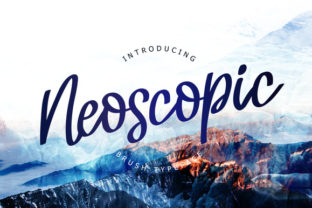
Another use case that stands out is typography. While digital brushes are not typically the first choice for lettering, the Neoscopic Brush can produce beautiful hand-drawn letterforms that feel organic and alive. The variable stroke thickness adds character to each letter, and the subtle texture gives the text a tactile quality that flat vector text lacks. For Instagram quotes, product labels, or event posters, this can be a quick way to add personality.
Practical Considerations When Choosing or Using This Brush
Before you integrate the Neoscopic Brush into your primary toolkit, there are a few things to keep in mind. First, make sure your hardware is up to the task. While the brush performs well on most modern devices, older tablets or computers with limited RAM may struggle at very high resolutions or with multiple brush instances. Test it on a sample canvas at your working resolution before committing to a full project.
Second, consider your typical output format. If you work primarily in vector formats like SVG or EPS, you may need to rasterize the brush strokes or use a compatible workflow. Some vector software supports raster brushes natively, but others do not. Check compatibility with your preferred application before you begin.
Third, experiment with the brush on different surfaces. The same brush can behave differently depending on the texture of your stylus tip, the screen protector you use, or even the humidity of your workspace. Spend a few minutes adjusting the pressure curve and tilt settings to match your personal drawing style. This upfront investment will pay off in consistency later.
Finally, think about how the brush fits into your broader creative process. The Neoscopic Brush is not a silver bullet. It is a tool that works best when combined with solid fundamentals in composition, color theory, and visual storytelling. Use it to enhance your work, not to replace foundational skills. When approached with that mindset, it becomes a valuable addition to any digital creator's arsenal.
Whether you are a professional illustrator, a marketing designer, an educator, or a weekend hobbyist, the Neoscopic Brush offers a level of natural responsiveness and visual richness that can elevate your work. It bridges the gap between the tactile immediacy of traditional media and the flexibility of digital tools. And in a field where the right tool can make the difference between a good outcome and a great one, that is worth paying attention to.