Using Bastardilla in Your Design and Content Workflows
Every project begins with a set of choices about how the final piece will look and feel. Among these choices, the typeface you select carries a significant weight—it sets the tone, guides attention, and can communicate a message before a single word is read. Bastardilla, with its deliberately raw and hand-drawn character, offers a distinct option for those who want their work to feel immediate, personal, and grounded. This is not a font for passive reading. It demands attention, and it rewards the user who understands when and how to deploy it effectively.
Rather than treating Bastardilla as a decorative afterthought, consider it an active ingredient in your broader process. Whether you are building a brand identity, designing a poster series, preparing educational materials, or assembling a social media campaign, integrating this typeface requires thoughtful planning. The goal is not to force it into every project but to recognize the specific contexts where its strengths align with your objectives.
What Bastardilla Is and Where It Belongs
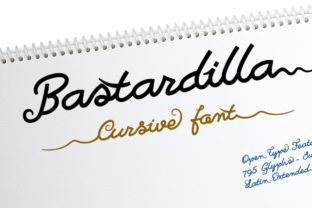
Bastardilla is a display typeface built on a foundation of irregular, hand-drawn forms. It carries an imperfect, rough-around-the-edges quality that feels intentional and human. Unlike polished, geometric fonts that aim for neutrality, Bastardilla brings a personality that can be bold, disruptive, or warm depending on how you use it. It sits comfortably in projects that benefit from a tactile or bespoke feel—event posters, limited-edition packaging, editorial spreads, artist portfolios, and any space where you want to break away from the sterile perfection of digital design.
Its place in a workflow is rarely as a body text face. Reading long paragraphs set in Bastardilla would strain the eyes and dilute its impact. Instead, treat it as a headline, a short accent, or a focal element. The key is to understand its role as a deliberate emphasis tool, not a default choice.
Preparing to Use Bastardilla in a Project
Before you open your design software, take a moment to evaluate the project’s overall goals. Bastardilla works best when the rest of your visual system supports its character. Ask yourself a few questions: Is the tone of this project informal, edgy, or handcrafted? Does the audience expect something polished and corporate, or are they open to something more raw? Will the typeface complement the images, colors, and layout, or will it fight them?
This preparation phase is often overlooked. Many designers jump straight to selecting a font and then struggle to make it fit. Instead, start with the emotional or conceptual direction of the piece. If you decide that Bastardilla is the right choice, plan your supporting elements around it. Pair it with a clean, neutral typeface for body copy—something like a simple sans serif or a classic serif that provides contrast. Choose a color palette that does not compete with the texture of the letterforms. Consider using plenty of white space so the irregular shapes have room to breathe.
Preparation also means gathering the right assets. If you are licensing Bastardilla, confirm that you have the appropriate weights and formats for your use case—web, print, or both. Test the font at various sizes to see how it behaves. Some display typefaces lose their charm when scaled too small or too large. Knowing these limits ahead of time saves you from mid-project surprises.
Integrating Bastardilla During the Creative Process
When you move from planning to execution, Bastardilla can serve as a creative catalyst rather than just a final polish. Start by sketching or wireframing your layout with placeholder text, but once the structure is clear, bring the actual typeface in early. Seeing Bastardilla in place can influence decisions about hierarchy, spacing, and imagery. Its irregular shapes might lead you to adjust margins, change the alignment of surrounding elements, or rethink the overall composition.
For example, imagine you are designing a poster for a local music event. Setting the headline in Bastardilla immediately signals a DIY or underground vibe. You might then choose photography that feels candid rather than staged, and use rough textures or grain overlays to echo the font’s handmade quality. The typeface becomes part of a coherent visual language, not an isolated decoration.
During this phase, pay attention to readability and hierarchy. Bastardilla can be expressive, but if every element on the page uses the same weight and style, the message becomes noise. Reserve the font for the most important words—the event name, a key quote, or a call to action. Let other elements recede into the background using simpler typefaces or smaller sizes.
Collaboration and Quality Control
If you work with a team—illustrators, copywriters, developers, or marketers—communicate the role of Bastardilla early. A copywriter might need to know that headlines will be shorter and more impactful because the typeface is visually dense. A developer might need to confirm web font licensing and loading performance. When everyone understands the reasoning behind the typeface choice, the final output feels cohesive rather than accidental.
Quality control becomes especially important with a unique typeface like Bastardilla. Proof at actual size. What looks exciting on a monitor at 200% zoom might feel overwhelming at full scale. Check for legibility in digital contexts—on mobile screens, in banners, or over background images. If the typeface includes alternate characters or ligatures, test those as well. Small details like these can elevate a good design to a polished one.
If the project involves print, request a physical proof before committing to a full run. The texture of the paper and the method of printing (digital, offset, letterpress) will interact with the shape of the letters. Seeing Bastardilla on paper gives you a final opportunity to adjust spacing, color, or size.
Long-Term Use and Consistency
For branding or ongoing projects, consistency across materials is essential. Bastardilla can act as a signature element if you use it consistently for specific purposes—say, all major headings in a zine series, or as the primary typeface for a product line. Create a simple style guide that documents where the font is used, what sizes are appropriate, and which pairings work best. This prevents drift over time, especially if new team members join or if you revisit the brand months later.
Long-term use also means planning for evolution. A typeface that feels fresh today might become a crutch if overused. Periodically review whether Bastardilla still serves the project’s goals. If the brand shifts toward a more refined or corporate direction, consider retiring the typeface gradually rather than abruptly. Consistency does not mean stagnation; it means making deliberate choices at each stage.
Practical Implementation Tips
Here are several actionable ways to work Bastardilla into your daily or project-based workflows:
- Use it as a title accent in blog posts, newsletters, or social media graphics. Pair it with a clean sans-serif body font for contrast.
- Incorporate it into mood boards early in the creative process to test whether a raw, hand-drawn look aligns with your direction.
- Experiment with all-caps for short, punchy messages. Bastardilla’s irregular forms often gain energy when set in uppercase.
- Layer it over textured backgrounds such as paper scans, concrete textures, or subtle grain. This reinforces the handmade feel.
- Test different line spacing to avoid letters colliding. Bastardilla’s shapes can be wide and unpredictable, so generous leading helps.
- Limit its use to one or two levels of hierarchy per page. Too many sizes or weights of the same display typeface can overwhelm the viewer.
- Save a color variant for each project where you use Bastardilla. A consistent palette tied to the font strengthens brand recall.
Common Pitfalls and How to Avoid Them
One of the most common mistakes with a typeface like Bastardilla is using it as the sole typographic voice. Because it is so distinctive, the rest of the design can feel like an afterthought. Always build around the font with deliberate choices about layout, imagery, and color. Another pitfall is forcing it into a project that requires a neutral or professional tone. Bastardilla is not a subtle tool—it makes a statement, and that statement must align with the message.
Similarly, avoid scaling Bastardilla into very small sizes for body copy or footnotes. It is a display face by nature, and at small sizes, the irregularities become muddled rather than charming. If you need a hand-drawn feel for body text, consider a more legible script or a humanist sans-serif instead.
Integrating Bastardilla Across Platforms and Media
If your project spans both digital and print, plan for how Bastardilla will translate. On the web, ensure you have the correct font files (woff2, woff) and that loading performance is acceptable. Some display fonts with many alternate characters can be heavier than standard web fonts. Use font-display swap to prevent invisible text while the font loads, and test on slower connections if your audience includes users with limited bandwidth.
For print, confirm that the font embeds properly in your production files. If you are working with a printer, let them know you are using a non-standard typeface so they can check for any issues during prepress. Bastardilla’s irregular edges might require slightly more bleed or margin than a conventional font, especially if the design bleeds to the edge of the page.
Social media graphics often get produced quickly, but Bastardilla can still have a place. Save a few preset templates in your design tool of choice—for example, a standard Instagram story layout or a LinkedIn banner—with Bastardilla already positioned for your headline. This speeds up execution while keeping your visual identity consistent.
The Role of Bastardilla in Your Larger Toolkit
No single typeface carries every project. Bastardilla is one tool among many. Its strength lies in its ability to inject personality and immediacy into work that might otherwise feel generic. The best results come when you treat it as a deliberate choice within a broader system of typography, spacing, color, and imagery. By planning ahead, testing thoroughly, and communicating with your collaborators, you can make Bastardilla a reliable part of your creative process without letting it dominate unnecessarily.
If you are new to working with expressive display typefaces, start with a single project—a poster, a zine cover, or a social media campaign. Observe how the font changes the way you approach layout and hierarchy. Over time, you will develop an instinct for when to reach for Bastardilla and when to let it rest. That instinct is the real outcome of thoughtful integration, and it will serve every project that follows.