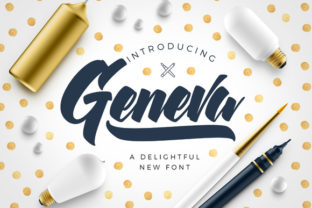
Geneva: The Unsung Workhorse of Digital Typography
If you have spent any time working with type on a Mac, you have likely encountered Geneva without giving it a second thought. That is exactly the point. Designed by Susan Kare in the 1980s as part of the original Macintosh system font family, Geneva is a humanist sans serif font built for clarity and endurance. It never tries to steal the show, but it holds the show together remarkably well. For designers, marketers, publishers, and small business owners who need dependable modern typography that does not get in the way of the message, Geneva deserves a fresh look.
Geneva belongs to the same historic early Mac lineup as Chicago, New York, and Monaco. While Chicago became the bold interface font and Monaco served programmers with its monospaced precision, Geneva landed right in the middle: clean, proportional, and exceptionally readable at small sizes. Its letterforms carry gentle humanist curves, noticeable in the lowercase a and e, which keep it from feeling cold or mechanical. The overall personality is professional with a quiet warmth. It is not stiff like many geometric sans serifs, nor is it quirky enough to feel informal. Geneva strikes a balance that makes it suitable for long-form reading, interface labels, and everything between.
Where Geneva Earns Its Keep Across Projects
The real strength of Geneva is its versatility across both digital and print environments. It was originally optimized for screen rendering at a time when every pixel mattered, and that legacy pays off today in web design, app interfaces, and social media graphics where clarity at small sizes is non-negotiable. When you need a body text face that remains readable on mobile displays, dense dashboards, or product descriptions, Geneva handles the job without calling attention to itself.
In brand identity work, Geneva can serve as a supporting sans serif font paired with a more expressive display font. It provides the structural backbone for business cards, email signatures, internal documents, and presentation decks. Because it carries a subtle association with early Apple design, using Geneva in tech-adjacent branding can evoke authenticity and a no-nonsense engineering mindset. It is a smart choice for startups, software tools, and creative studios that want their brand identity to feel approachable rather than corporate.
For editorial design and publishing, Geneva works well in print collateral that needs maximum readability in limited space. Newsletters, zines, brochures, and reports benefit from its condensed letterfit and open counters. It also performs reliably in packaging design where ingredient lists or instructions must remain legible at a glance. Hobbyists and crafters running small product lines will find Geneva a practical choice for labels and hang tags that communicate professionalism without feeling sterile.
Where Geneva truly excels is in long-form digital reading. Articles, blog posts, documentation, and knowledge bases benefit from its humanist proportions. The x-height is generous, the ascenders and descenders are controlled, and the overall rhythm of the text feels natural. Readers spend less effort decoding letter shapes and more time absorbing the content. That is the highest compliment you can pay any typeface used for body copy.
Readability, Hierarchy, and Brand Perception
Typography is the delivery system for your message. If the delivery is awkward, the message suffers. Geneva influences readability by maintaining even color across a block of text. There are no dramatic thins or thicks, no unusual letterforms that trip up the eye. This consistency allows you to build clear visual hierarchy using weight, size, and spacing rather than fighting the font itself.
From a brand perception standpoint, Geneva communicates reliability and straightforwardness. It is not trendy. It is not trying to be a premium font with exaggerated details or decorative flourishes. That honesty resonates with audiences who are tired of flashy marketing. When a small business uses Geneva across its website, email signature, and printed materials, the message becomes: we focus on substance, not spectacle. That kind of understated confidence builds trust over time.
Audience engagement improves when the reading experience is frictionless. Whether you are designing social media graphics with short captions or publishing a 3000-word guide, Geneva reduces cognitive load. Readers stay on the page longer, scroll further, and retain more. For bloggers and content creators competing for attention in a crowded feed, that reduction in reading effort is a genuine competitive advantage.
Practical Guidance for Choosing and Using Geneva
Evaluating whether Geneva fits your project starts with understanding your content hierarchy. If your primary need is body text across digital screens, Geneva is a strong candidate. For headlines and display roles, you will want to pair it with a more expressive serif font or a bold display font to create contrast. A pairing like Geneva for body copy with a sturdy serif font for headings creates a reliable editorial feel. For a more contemporary look, pair Geneva with a geometric sans serif that shares its clean proportions but offers heavier weights for titles.
When testing font pairings, avoid faces with competing personalities. Geneva is neutral but humanist, so pairing it with an overly mechanical sans serif can feel disjointed. Conversely, a delicate script font or a playful handwritten font can complement Geneva nicely in accent roles like pull quotes or section headers. The goal is to let Geneva handle the heavy lifting of readability while the pairing font adds personality in smaller doses.
Review the included styles carefully. Geneva ships with regular, bold, italic, and bold italic weights in most Apple environments. Some digital versions may not include a true medium or light weight, so plan your hierarchy around what is available. If you need a broader range of weights for complex projects, consider looking at the commercial font families that draw inspiration from Geneva but offer extended families. Always check commercial licensing before using Geneva in products, logos, or client work. While Geneva is preinstalled on Apple systems, redistribution rights are limited, so verify that your use case is covered under the license agreement.
For readability considerations, test Geneva at the actual sizes your audience will encounter. It performs well at 10 to 14 pixels on screen and 8 to 12 points in print. At very large sizes, the simplicity of the letterforms can feel plain, so reserve those roles for a more decorative creative font. At small sizes, Geneva outshines many modern sans serif fonts because it was designed specifically for low-resolution rendering. That heritage remains valuable in today's interface-heavy world.
If you are building a brand identity from scratch, consider using Geneva as your base sans serif font for internal documentation, customer communications, and digital touchpoints. Then invest in a premium font or a distinctive typeface for the logo and primary headlines. This approach keeps your budget manageable while maintaining consistency. Many small business owners and solopreneurs overlook how much a reliable system font can carry a brand, especially in the first few years when resources are tight. Geneva is ready for that job.
For designers and marketers working on web design, Geneva renders cleanly across modern browsers and operating systems. Because it is a system font on macOS and iOS, it loads instantly with no added network requests. That performance boost matters both for page speed rankings and for users on slower connections. Including Geneva in your font stack as a preferred option alongside fallback sans serifs is a smart, performance-aware choice.
Geneva has never been a flashy font, and that is precisely its lasting power. It is a typeface that respects the reader, supports the designer, and serves the message. In an era where every brand chases attention with bold display fonts and elaborate packaging, choosing a clear, honest sans serif for the body of your work is a quiet act of confidence. Give Geneva a role in your next project, and let it earn your trust one paragraph at a time.