The Quiet Charm of Austina in Everyday Design Work
Every now and then a typeface lands in your font library and immediately feels familiar, not because you have seen it before, but because it captures something you have been trying to say. Austina is one of those fonts. It does not scream for attention, yet it holds a room with quiet confidence. If you have been searching for a display font that feels both personal and polished, this one deserves a closer look.
What Makes Austina Stand Out Visually
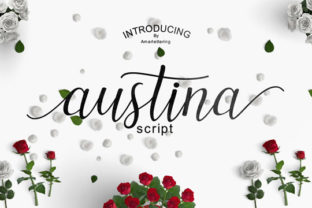
Austina lives in that sweet spot between a refined script and a casual handwritten style. It carries the warmth of something penned by hand but with enough structure to feel intentional rather than thrown together. The letterforms have a gentle flow, with slightly uneven baselines that give it a human touch without sacrificing readability. It is a handwritten font that does not try to be messy or overly decorative. Instead, it leans into elegance with a relaxed posture.
The stroke contrast is subtle, not dramatic. You will notice soft curves in letters like the lowercase a and e, and descenders that trail off with a natural grace. It is not a rigid serif font or a cold sans serif font. It lands somewhere in the territory of a modern script with enough personality to feel like a signature rather than a template. The uppercase letters carry a bit more flourish, making them ideal for pulling attention without overwhelming the rest of the text.
What I find most appealing is how Austina avoids looking like every other script on the market. It does not rely on extreme swashes or exaggerated loops. It feels like a font designed by someone who understands that less is often more, especially when you are trying to build a brand identity that people actually trust.
Where Austina Performs Best Across Projects
Because Austina sits in that friendly, approachable space, it works well across a surprising range of applications. I have seen it used effectively in logo design for boutique brands, wedding stationery, and small-batch product packaging. It brings a sense of care and craftsmanship that is hard to fake with a more mechanical typeface.
For editorial design, Austina shines in short-form contexts. Think pull quotes, section headers, or introductory paragraphs where you want to establish a warm tone before switching to a clean sans serif for body text. It can also carry social media graphics beautifully, especially on Instagram or Pinterest where visual tone matters as much as the message itself.
In packaging design, especially for artisanal goods like candles, skincare, or specialty foods, Austina communicates quality without pretension. It feels like a brand that values authenticity over trends. For small business owners who handle their own branding, this font can save a lot of time because it already brings a cohesive personality. You do not need to layer on extra ornamentation or illustration to make the design feel complete.
On the digital side, Austina works well in web design for hero headings, navigation accents, or call-to-action labels. Just keep in mind that like most display fonts, it is best used at larger sizes. At small sizes on screens, the handwritten details can get lost, so reserve it for moments where you want to make an impression.
Practical Applications for Bloggers, Creators, and Marketers
If you are a blogger or content creator, Austina can become a reliable part of your visual identity. Use it for your blog title, email header, or your about page intro. It signals that there is a real person behind the content. For marketers, it works well in campaign headers where you want to evoke emotion rather than simply inform. A font like this can shift the feel of a landing page from transactional to relational in a single headline.
I have also seen Austina used effectively in digital products like planners, workbook covers, and course materials. It adds a handmade quality that makes digital assets feel more tangible. If you sell design assets or templates, including Austina in your offerings gives buyers a versatile option that pairs easily with neutral sans serifs.
How Austina Influences Readability, Hierarchy, and Brand Perception
Font choice is never just about aesthetics. It directly affects how people experience your content. Austina influences readability in a positive way because its letterforms are open and well-proportioned. Unlike some handwritten fonts that sacrifice clarity for style, Austina maintains legibility even in short phrases. You do not have to squint to decode a word, which is a basic requirement that surprisingly many display fonts fail to meet.
When it comes to visual hierarchy, Austina works best as a contrast tool. Pair it with a neutral sans serif font like Montserrat, Lato, or a classic serif like Playfair Display, and you instantly create a clear division between headline and body. The eye naturally moves from the expressive headline down to the calm body text. That rhythm is what keeps readers engaged and helps them navigate your content without effort.
Brand perception is where fonts earn their keep. A handwritten font like Austina communicates approachability, creativity, and attention to detail. If you are a designer or entrepreneur building a brand from scratch, using Austina signals that you value personality over corporate consistency. That can be a powerful differentiator in a market full of sameness. Consistency across your materials, from your website to your packaging to your email newsletters, reinforces that identity every time someone encounters your brand.
Recognition also improves when your font choices are distinctive but not distracting. Austina has enough character to be memorable without being gimmicky. That balance is hard to find, and it is why premium font selections often come down to how a typeface behaves over time rather than how it looks in a single mockup.
Choosing Austina and Evaluating Fit for Your Projects
Before you commit to any font, it helps to ask a few practical questions. What is the emotional tone you are aiming for? Austina leans warm, friendly, and slightly refined. If your project requires a cold, technical, or ultra-minimal feel, this is probably not the right fit. But if you want to invite people in, soften a message, or add a layer of craftsmanship, Austina is a strong candidate.
Testing font pairings is essential. Austina pairs well with clean sans serifs and also with light-weight serifs. Try it with a thin geometric sans for contrast, or with a simple old-style serif for a more traditional feel. Avoid pairing it with another busy script or a heavy decorative font. That creates visual noise and confuses the hierarchy. The goal is to let Austina lead the expressive part while a supporting typeface carries the functional load.
Review the included styles carefully. Some versions of Austina come with multiple weights, alternates, and ligatures. These extras matter because they give you flexibility. Swashes and alternate characters can help you customize headlines and avoid repetitive shapes, especially in logo design where every letter needs to feel intentional. If you are working on longer text passages, make sure the font includes enough glyphs to support punctuation, numbers, and special characters you might need.
Readability considerations go beyond letterforms. Test the font at the sizes you actually plan to use it. A headline at 48 pixels might look gorgeous, but how does it read at 24 pixels in a subheading? How does it perform on a dark background or over an image? These are the real-world tests that separate a usable creative font from one that only looks good in a product shot.
Licensing and Practical Next Steps
Commercial licensing is something many creatives overlook until it becomes a problem. If you are using Austina for client projects, branded merchandise, or any revenue-generating work, confirm that you have the proper commercial license. Most premium font foundries offer standard desktop licenses that cover a wide range of uses, but web font licenses and app embedding may require separate terms. Always read the license file or the foundry's FAQ before publishing your work.
For personal projects, hobbyists, and crafters, many versions of Austina are available with personal use licenses at a lower cost or even free. Just be transparent about your use case. If you are making items to sell on Etsy or using the font in a commercial ebook, upgrade to the appropriate license. It is a small investment that protects you and supports the type designer who created the font.
Final Practical Recommendations
Austina is not a font you want to use for long body copy or data-heavy layouts. It is a display font, and it performs best when given space to breathe. Use it to mark moments of importance, not to fill space. If you are designing a brand identity, consider using Austina as your primary brand font for headlines and pairing it with a reliable workhorse sans serif for everything else. That combination gives you personality where it counts and readability where it matters.
For designers and small business owners who wear many hats, Austina simplifies decisions. It brings a cohesive look without requiring a full type system. You can build a logo, a social media template, and a product label all from the same font family, and they will feel connected. That consistency builds trust with your audience faster than a mismatched collection of trendy fonts ever could.
If you are curious about Austina, start by downloading a trial version if available, or test it on a mockup of your actual project. See how it feels in context. Type your own brand name, your tagline, or a sentence that matters to your work. That is the only real test. If the font makes you want to keep designing, it is probably the right one.